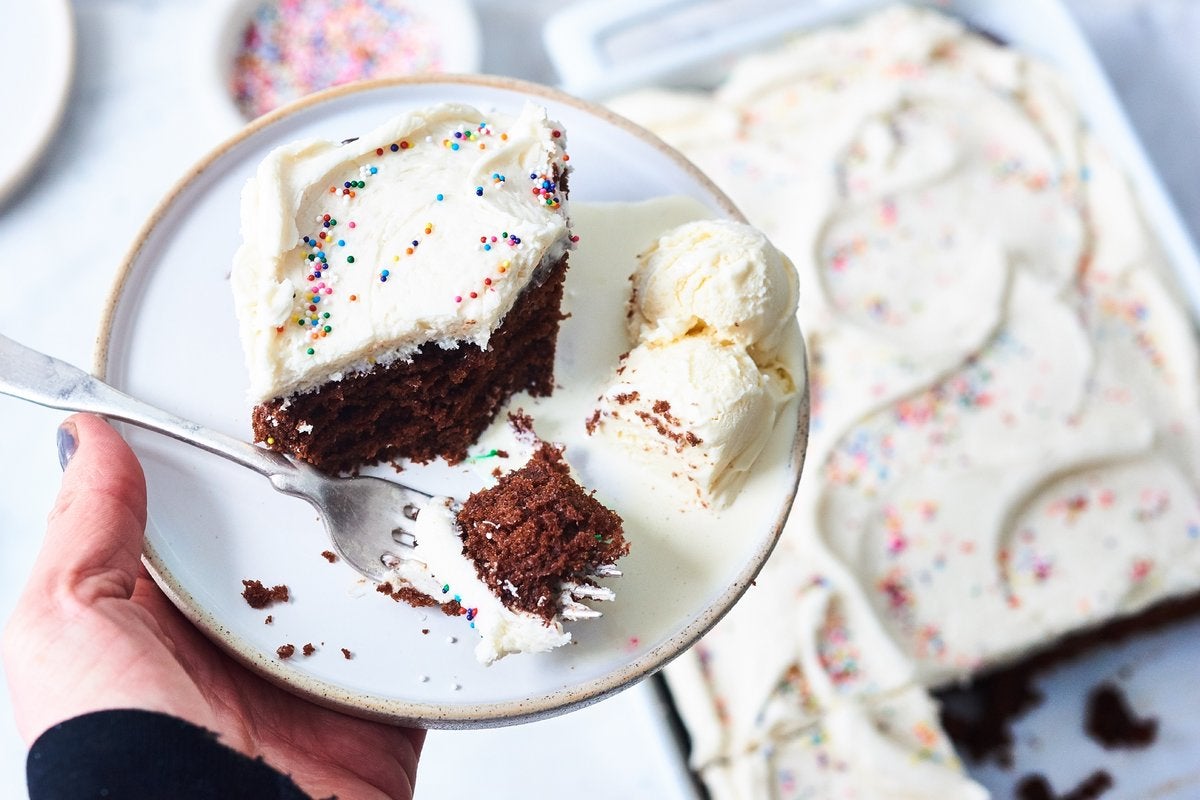
Beyond the Recipe: Mastering Cake Doneness for Baking Success
There's a universally acknowledged truth among bakers, both seasoned and novice: the joy of a perfectly baked cake is unparalleled. Its tender crumb, moist texture, and rich flavor are the hallmarks of a true culinary triumph. Conversely, the disappointment of an underbaked, gummy, or an overbaked, dry and tough cake is equally profound. These common baking pitfalls can turn anticipation into frustration, making the seemingly simple act of baking a cake a high-stakes endeavor. But what if you could virtually eliminate these risks, ensuring a sublime result every single time? The secret lies in understanding how to tell when your cake is done, transforming guesswork into confident precision. This comprehensive guide will equip you with the essential techniques to achieve cake perfection, consistently.
Setting the Stage for Cake Perfection: Pre-Baking Essentials
Before you even dream of cracking an egg or measuring flour, your journey to a perfectly baked cake begins with proper preparation. The most accurate recipe, the finest ingredients, and the most meticulous mixing technique can all be undermined by a single overlooked factor: your oven.
Calibrate Your Canvas: The Importance of Oven Temperature
Many home ovens are surprisingly inconsistent, often running hotter or colder than the temperature displayed on their dials. This discrepancy can significantly impact baking times and cake quality. The single most crucial step you can take for baking success is to invest in a simple, inexpensive oven thermometer. Place it on the middle rack and monitor it regularly. This will give you a true reading of your oven's internal temperature, allowing you to adjust your oven dial accordingly. For instance, if your thermometer reads 325°F when your oven is set to 350°F, you'll know to set your dial higher next time to reach the target temperature.
Time is an Estimate: The Art of Early Checks
Recipe baking times are best estimates, developed in a specific oven under specific conditions. Your oven, your pan, and even the humidity in your kitchen can influence how quickly a cake bakes. Therefore, treating the recipe's baking time as an absolute is a common mistake. Instead, consider it a general guideline. Set your timer for 5-10 minutes *earlier* than the recipe suggests for standard cakes, and even 15-20 minutes earlier for larger bakes like loaf cakes or Bundt cakes that require an hour or more. This proactive approach prevents overbaking and gives you ample opportunity to assess doneness using the methods below.
Essential Doneness Checks for a Perfect Cake
With your oven calibrated and your timer set, it's time to learn the practical skills that will tell you exactly visual, touch, & tester: your cake doneness guide. You won't need to use every single method for every cake, but understanding them all will give you a versatile toolkit for any baking challenge.
The Visual Story: What Your Cake's Appearance Tells You
The first indication of a nearing doneness often comes from what you see. Observe these visual cues carefully:
- Sides Pulling Away from the Pan: As a cake bakes and its internal structure sets, the edges, which are the first to cook, begin to shrink slightly. You'll notice a thin, delicate gap forming between the cake's perimeter and the sides of the baking pan. This is a strong indicator that the cake is firming up and nearing completion. For standard round or square cakes, this sign is usually quite reliable.
- Golden-Brown Edges and Surface: Most cakes, especially those with lighter batters like vanilla or yellow cake, will develop a beautiful golden-brown hue on their edges and a light golden color across the top when fully baked. The surface should also appear set and firm, not shiny or wet. For darker cakes, such as chocolate, relying solely on color is less effective. Instead, look for a matte, rather than glossy, appearance on the surface, and ensure the edges look dry and firm to the touch. Loaf cakes, which bake for longer, can develop considerably darker edges, so don't be alarmed by a deeper brown here.
The Bounce Test: Feeling for Doneness
The touch test is an intuitive and often accurate method, especially when combined with visual cues. Gently press the center of your cake's top surface with a clean fingertip:
- Bouncy and Firm: A properly baked cake will feel resilient and firm to the touch, springing back gently when you remove your finger. This indicates that the protein and starch structures within the cake have fully set.
- Leaving an Indent: If your finger leaves a noticeable indentation, the cake is still underbaked. The internal structure hasn't fully set, meaning it's still too moist and delicate. Continue baking for a few more minutes, then retest.
Pro Tip: Always use a light touch for this test to avoid deflating a delicate cake or leaving a permanent fingerprint.
The Classic Tester: Toothpicks, Skewers, and Knives
When in doubt, or for a more definitive answer, the cake tester method is your best friend. This technique involves inserting a thin implement into the thickest part of the cake, usually the center. You can use a wooden toothpick, a thin metal skewer, a metal cake tester, or even a thin paring knife.
Here’s how to interpret the results:
- Wet Batter Clinging: If the tester comes out with raw, wet batter clinging to it, the cake is definitively underbaked. Return it to the oven and continue baking.
- Few Moist Crumbs: This is often the ideal result. If the tester comes out with a few small, moist crumbs attached, your cake is likely perfectly done or on the verge of being so. The residual heat in the cake (known as carry-over baking) will complete the cooking process as it cools, resulting in a perfectly moist crumb.
- Completely Clean: While a clean tester might seem like the goal, it can sometimes indicate a slightly overbaked cake, especially for delicate batters. If the tester comes out bone-dry, your cake might be on its way to becoming dry. For most cakes, a few moist crumbs are preferable.
Important: Always test the very center of the cake, as this is the last part to cook. Testing the edges will give a false positive, leading to an underbaked center.
Beyond Sight and Touch: The Thermometer Method
For ultimate precision, especially with larger cakes, dense batters, or when baking gluten-free or alternative flour cakes, an instant-read thermometer is an invaluable tool. It offers an objective measure of internal doneness, removing all guesswork.
- Ideal Temperature Range: Most cakes are fully baked when their internal temperature reaches between 200°F and 210°F (93°C and 99°C). For richer cakes like cheesecakes or custardy cakes, the range might be slightly lower (180-190°F or 82-88°C), so it's always good to consult specific recipe notes if available.
- How to Use: Insert the probe of an instant-read thermometer into the very center of the cake, ensuring it doesn't touch the bottom or sides of the pan. Hold it steady until the temperature stabilizes.
Using a thermometer eliminates the ambiguity of visual and touch tests, providing a scientific assurance of doneness. It’s particularly useful for preventing that dreaded gummy center common in underbaked cakes.
The Consequences of Under- and Overbaking
Understanding why doneness matters reinforces the importance of these checks. The difference between a perfect cake and a problematic one often comes down to just a few minutes in the oven.
- The Underbaked Cake: A cake removed from the oven too soon will have a dense, heavy texture, often appearing wet and sticky in the center. It will likely collapse as it cools, taste raw, and be unpleasantly gummy. The uncooked flour and eggs not only affect texture but can also impact flavor.
- The Overbaked Cake: On the other end of the spectrum, an overbaked cake has lost too much moisture. It will be dry, crumbly, and tough, often with a coarse or leathery texture. The delicate flavors can be diminished, and the overall eating experience becomes arduous rather than enjoyable.
Striking that perfect balance ensures the cake's crumb is tender and moist, making every bite a delight.
Pro Tips for Consistent Cake Perfection
- Know Your Oven's Quirks: Beyond temperature, many ovens have hot spots. If your cakes consistently brown more on one side, rotate them halfway through baking (but not too early!) to ensure even cooking.
- Resist Early Peeking: Opening the oven door too frequently or too early can cause a sudden drop in temperature, potentially leading to a cake collapsing or baking unevenly. Wait until at least two-thirds of the suggested baking time has passed before checking.
- Cooling is Crucial: Even after your cake is out of the oven, it continues to cook slightly due to residual heat. Follow cooling instructions meticulously – typically, a short period in the pan on a wire rack, then fully inverted onto the rack to prevent condensation and sogginess.
Mastering the art of telling when your cake is done is perhaps the most empowering skill a baker can acquire. By combining visual observation, tactile assessment, the reliable cake tester, and for ultimate precision, an internal thermometer, you can confidently navigate the baking process. No longer will you dread a dry or gummy outcome; instead, you'll consistently produce cakes that are tender, moist, and utterly divine. Armed with these techniques, you're ready to conquer any cake recipe and revel in the sweet success of a perfectly baked creation every time.
